 edeale
Comparing Products Without Getting Fooled
Two listings can look almost identical and still be completely different purchases once you check the model number, the review dates, and what's actually included in the box.
This guide breaks product comparison down into a repeatable process: what to check first, which differences actually matter, and which ones are just marketing dressed up as a spec. It’s written for anyone comparing two or more options before checkout — not just people buying electronics.
- The six factors that actually separate two similar products
- A step-by-step process you can run in under 10 minutes
- The comparison traps that make a worse product look better on paper
- How to tell which reviews are worth trusting
Two listings with the same marketing name can be different revisions of a product. Before comparing specs or price, confirm the exact model number on each listing — it’s usually in small print under the title or inside the product details table.
What Actually Matters When You Compare Two Products
Most product listings are built to highlight strengths and bury trade-offs. The factors below are the ones that consistently separate a good purchase from a disappointing one — everything else is usually a tiebreaker.
The factors worth comparing
A 6-Step Way to Compare Any Two Products
A 6-Step Way to Compare Any Two Products
-
Confirm the exact model number
Copy the model number from each listing before doing anything else. If you can’t find one anywhere, treat that as a warning sign on its own.
-
Separate must-haves from nice-to-haves
Write down the two or three features you actually need. Everything else is a tiebreaker, not a deciding factor.
-
Normalize the price
Work out the price per unit, per use, or per year — whatever makes the comparison apples-to-apples.
-
Check review volume and date
A 4.6-star rating from 40 reviews carries less weight than a 4.3-star rating from 4,000 — and reviews older than 12–18 months may describe a since-changed product.
-
Read the warranty and return policy
Look for the actual number of days and what’s excluded, not just the word “guarantee.”
-
Verify any discount before you trust it
Check a price-history tool to see whether the “was” price is real before it factors into your decision.
Run through all six even on a purchase you’re fairly sure about — it takes under ten minutes and catches most of what marketing copy is designed to hide.
Where Comparisons Go Wrong
Some listings pad the specifications table with numbers that sound impressive but don’t reflect real-world performance — peak output instead of sustained output, for example. If a spec looks unusually high compared to similar products, treat it as a question to research, not a reason to buy.
Key Terms Worth Knowing
Terms You'll See While Comparing Products
- MSRP
The manufacturer’s suggested retail price — a reference point, not necessarily what any retailer actually charges.
- Model number
The manufacturer’s unique identifier for a specific version of a product, usually more precise than the marketing name.
- Unit price
The cost per single item, per weight, or per use — the only way to fairly compare different pack sizes.
- Open-box
A returned or display item resold as new-condition stock, typically inspected but not necessarily used.
- Refurbished
A previously used or returned item that’s been tested and repaired if needed, usually resold with a shorter warranty than new.
- Total cost of ownership
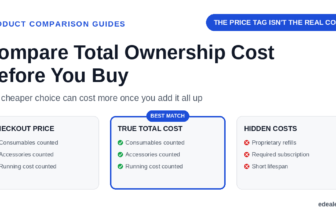
The full cost of a purchase over time — accessories, consumables, subscriptions, or maintenance — not just the checkout price.
Tools That Make Comparison Easier
You don’t have to do all of this from memory. A price-history browser extension shows you whether a discount is real before you click buy, and our own comparison tool lets you line products up side by side instead of juggling browser tabs.
If you’re still narrowing down which products to compare in the first place, our product search tool is a faster starting point than a generic search engine, and it’s worth reading how we verify listings and claims so you know what “verified” actually means when you see that word on a comparison site — including this one.
edeale’s picks and comparisons are built under a single editorial independence policy — featured or sponsored placement never changes a verdict. If you’re weighing up where to shop as much as what to buy, our retailer guides cover trust and return-policy differences retailer by retailer.
A product with a mix of glowing and scathing reviews for the same version usually points to inconsistent quality control, not fake reviews. Filter by verified purchase and read the recent ones first — a small share of any product’s reviews tend to be one-star for reasons unrelated to the product itself, like a delivery issue or the wrong item arriving.
Product Comparison FAQ
What's the fastest way to compare two products?
Confirm the exact model number on each listing, then compare price per unit, warranty length, and recent verified review volume — those four checks catch most of the differences that matter.
Should I always buy the highest-rated product?
No. A high average rating built on very few reviews is less reliable than a slightly lower rating backed by thousands of recent verified purchases.
Is a more expensive product always better value?
Not automatically. Extra cost sometimes buys brand name or retail margin rather than measurable quality, so it’s only worth paying for when the price difference maps to a feature you’ll actually use.
How can I tell if a discount is genuine?
Check the product’s price history with a tool like a browser price-tracking extension or the retailer’s own price-history feature — if the “was” price only appeared days before the sale started, the discount is likely inflated.
What's the difference between MSRP and the price I actually pay?
MSRP is the manufacturer’s suggested price, while the checkout price is what a specific retailer is actually charging — the two can differ significantly, especially during sales periods.
Do open-box or refurbished items compare the same way as new ones?
Mostly, but add two extra checks: the seller’s specific condition grading and the shortened warranty period, since both vary far more between sellers than they do for new items.
How many reviews are enough to trust a product's rating?
There’s no fixed number, but a few hundred recent verified reviews are far more reliable than a handful, since a small sample can be skewed by one bad batch or a run of delivery problems.
What should I do if two products look identical on paper?
Check what each brand’s return policy and warranty actually cover, since near-identical specs often diverge most in what happens after something goes wrong.
Does the retailer matter as much as the product itself?
Yes. The same product bought from an unreliable third-party marketplace seller carries more return and authenticity risk than buying it directly from the retailer, even at an identical price.
Explore the Full Product Comparison Series
- Product Model Numbers Explain What You Are Actually Buying
- When Product Reviews Disagree, Which Ones Should Count?
- Latest Model vs Previous Model: When the Upgrade Pays
- Open-Box vs Refurbished: Which Risk Is Worth Taking?
- Budget vs Premium Products: Pay More Only When It Matters
- Bundle vs Buying Separately: Do the Extras Earn Their Cost?
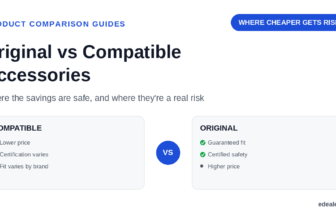
- Original vs Compatible Accessories: Where Savings Become a Risk
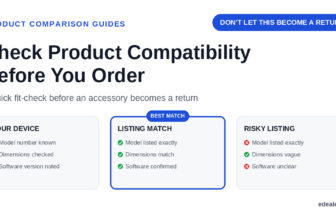
- Check Product Compatibility Before an Accessory Becomes a Return
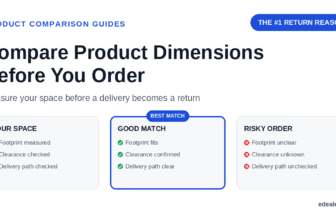
- Compare Product Dimensions Before Your Space Becomes the Problem
- Compare Total Ownership Cost Before the Cheaper Choice Costs More
Related Reading
- How to Choose a Trustworthy Online Retailer
- Best Price-Tracking Tools & Browser Extensions
- Compare Products Side by Side
- How We Verify Listings and Claims
Put this checklist to work
Use our comparison tool to line products up side by side, or browse today’s verified deals to see real pricing in action.
Comparing products is a skill, not luck
Two products rarely differ as much as their marketing suggests, and they rarely look as similar once you check the model number, the real price per unit, recent reviews, and the return policy. Run through the six steps above and you’ll catch most of what actually separates a good purchase from a disappointing one.