 edeale

Best Camera Drones Under £300 of 2026
Obstacle avoidance and real combined flight time separate a good sub-£300 drone from a frustrating one in 2026, not the megapixel count on the box.
We compared four current camera drones under £300 on gimbal type, flight time, and UK retail pricing. Every price below comes from live Amazon UK listings checked today, and every spec is cross-checked against the manufacturer’s own pages, not just the box copy.
- Best overall: DJI Lito 1 (4K/60fps, 3-axis mechanical gimbal, 249g, £299)
- Best value: Potensic ATOM SE (62 min combined flight across 2 batteries, £269.99)
- Best for beginners: Holy Stone HS175D (brushless motor, follow-me, £112.99)
- Best range: Holy Stone HS360E (up to 6km transmission, £179.99)
The DJI Lito 1 is the strongest all-around pick under £300 for 2026 — a real 3-axis mechanical gimbal, 4K/60fps video, and omnidirectional obstacle sensors that the older DJI Mini 4K never had, all under 249g. If total flight time per outing matters more to you than brand name, the Potensic ATOM SE’s 62 minutes of combined air time across two included batteries at £269.99 is the better value. Note that every drone here still needs a Flyer ID and Operator ID to fly legally in the UK, whatever the weight — see the FAQ below.
Drone prices move a lot around sales. The DJI Lito 1 launched at £299 in April 2026 and its Fly More Combo sits at £429 with extra batteries and a proper remote ,check a price-history tool before assuming any listed “deal” price is actually a discount, and treat the figures below as a snapshot from today rather than a permanent price.
The four we'd actually buy


What actually matters in a sub-£300 camera drone
DJI Lito 1
True 3-axis gimbal, obstacle avoidance, under 249g
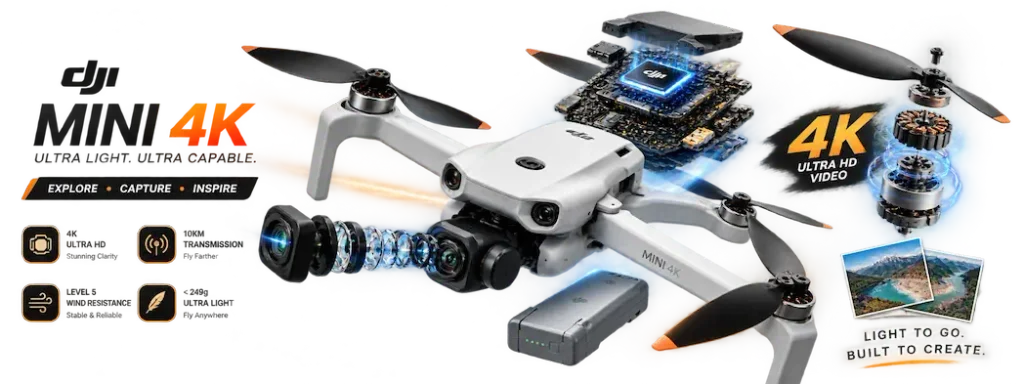
DJI’s newest budget drone, launched April 2026, ships with a real mechanical 3-axis gimbal and omnidirectional obstacle sensors the older Mini 4K never had, while staying under 249g.
- All prices mentioned above are in British pound.
- This product is available at Amazon.co.uk, eBay.
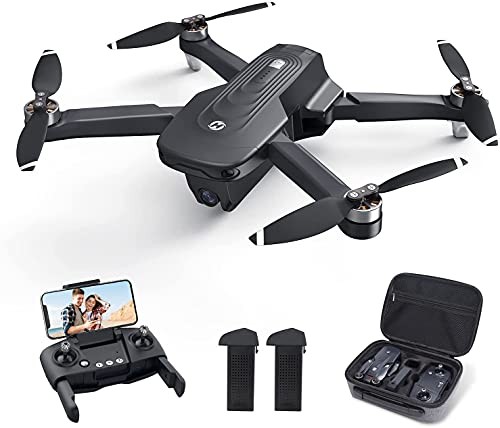
- At amazon.co.uk you can purchase Holy Stone HS175D Foldable GPS Drone with 4K Camera for Adults, 46 Mins for only £112.99
- The lowest price of DJI Lito 1, 4K Camera Drone for Beginners, Updated Version of Mini 4K was obtained on September 5, 2026 8:57 am.
Specifications
- Real mechanical 3-axis gimbal, not software-only stabilization
- Omnidirectional obstacle sensors — the previous DJI Mini 4K only sensed downward
- 21km transmission range is well beyond what most casual flyers will use
- At £299, this is the most expensive pick in this guide before any discount
- Base package includes only a basic remote and no internal storage — budget for a microSD card
The mechanical gimbal is the real differentiator, not the resolution number. Software stabilization can smooth footage in calm conditions but breaks down in wind; a mechanical gimbal keeps the camera physically level regardless. The obstacle sensors matter just as much for a first-time flyer — they’re what stops most beginner crashes into trees, fences, and walls.
Don’t confuse the Lito 1 with the pricier Lito X1, which adds internal storage and a proper RC-N3 controller for around £100 more. The Lito 1 in this guide is the base model, sold with only a basic remote.
Potensic ATOM SE
4K camera, 62 minutes total flight time
The ATOM SE Combo ships with two batteries for a combined 62 minutes of flight time, at £29 under the DJI Lito 1’s price.
Specifications
- Two batteries included brings real total air time to 62 minutes, roughly double the DJI Lito 1’s single-battery flight
- £29.01 cheaper than the DJI Lito 1’s base price for the combo
- GPS-based Follow Me and Circle Flight modes included as standard
- Single-axis gimbal plus software stabilization, not the DJI’s full 3-axis mechanical setup
- No obstacle avoidance sensors — you’re relying on line-of-sight flying to avoid hitting things
Two included batteries change how usable a drone actually is more than most spec sheets suggest. A single 31-minute flight often isn’t enough for a full outing, and buying a second DJI battery separately closes most of the price gap with the ATOM SE anyway.
This is the pick for someone who wants to fly more and worry less about brand reputation, without giving up GPS-based safety features.
Brushless motor, follow-me mode, 2 batteries
A beginner-focused drone with brushless motors (more durable than the brushed motors common at this price) and a follow-me mode that tracks the pilot automatically, at less than half the DJI Lito 1’s price.
Specifications
- Brushless motors last longer and need less maintenance than the brushed motors common on budget drones
- Follow-me mode is a genuinely useful beginner feature for solo footage
- Two batteries included at the lowest price point in this guide
- Image quality trails the DJI Lito 1’s sensor and gimbal combination
- No mechanical gimbal — stabilization relies on optical flow positioning, not physical counteraction
Brushless motors are worth specifically checking for at this price point. They’re quieter, more efficient, and meaningfully more durable than the brushed motors that show up in cheaper drones, and Holy Stone doesn’t bury this spec in fine print.
For a first drone, GPS auto-return and follow-me mode reduce the two most common ways beginners lose or crash a drone: flying out of visual range and losing manual tracking control.
Holy Stone HS360E
4K EIS camera, up to 6km transmission range
The upgraded successor to the HS360S, with a longer transmission range than any other pick in this guide and electronic image stabilization to smooth out footage.
The HS360E replaces the older HS360S in Holy Stone’s lineup, and the upgrade shows mainly in transmission range and image stabilization rather than flight time. If you fly mostly in a garden or local park, that 6km figure will always be more range than you actually use — the real benefit is a stronger, more reliable signal at shorter distances.
As with every drone in this guide, check current pricing before buying. Budget drone prices fluctuate around sales at least as much as the pricier DJI options.
Before you buy any camera drone
-
Register for a Flyer ID and Operator ID
Any camera drone under UK CAA rules needs both, even under 250g — sort this before your drone arrives, not after.
-
Confirm gimbal type
A true 3-axis mechanical gimbal handles wind meaningfully better than software-only stabilization or EIS.
-
Check a price-history tool before buying
Drone prices swing by £50-90 around sales events — confirm a “deal” price against recent history.
-
Check your local no-fly zones
Registration doesn’t override airspace restrictions — use the CAA’s drone safety map before flying near airports or built-up areas.
Prices on all four drones here can move £30-90 around sales events within a few months of launch. Check a price-history tool before treating any listing’s discount as guaranteed real.
If a drone you like only ships with one battery, price a second battery before comparing it against a competitor that includes two — the real cost gap often shrinks or disappears.
Camera drone FAQ
Do I need to register a drone under 250 grams in the UK?
Yes. Under UK CAA rules, any drone with a camera needs a Flyer ID and an Operator ID regardless of weight — the 250g exemption some buyers have heard of is a US FAA rule and doesn’t apply here.
What's the difference between a mechanical gimbal and electronic image stabilization?
A mechanical gimbal physically counteracts movement in real time, which handles wind and vibration meaningfully better than EIS, which smooths footage digitally after it’s captured.
Is a longer stated flight time always better?
Not necessarily — check whether the figure is a single-battery flight time or combined time across multiple included batteries, since manufacturers often present them the same way.
Are Holy Stone drones a reliable alternative to DJI?
Holy Stone generally delivers GPS and 4K features at 40-60% less than DJI, with some tradeoff in camera quality and stabilization, particularly in low light or wind.
Do camera drone prices really fluctuate that much?
Yes. Newly launched DJI models in particular have historically swung £50-90 around sales events within a few months of release, which is typical for this category.
What should a beginner prioritize over image quality?
GPS-based auto return-to-home and, ideally, obstacle avoidance sensors — these reduce the two most common ways new pilots lose or crash a drone.
Do I need two batteries?
A single battery, usually 30-36 minutes on these four drones, is often not enough for a full outing — two batteries meaningfully change how usable a drone is on any given trip.
Can I fly any of these drones near an airport?
No. Registration doesn’t override airspace restrictions near airports and other controlled areas — check the CAA’s drone safety map before flying, regardless of your drone’s weight or registration status.
If you’re buying a drone through a marketplace seller, it’s worth reading how to avoid fake eBay sellers and how to return an Amazon third-party item if the unit that arrives doesn’t match the listing. And before you fly anything you buy, check our UK drone laws FAQ for the current Flyer ID and Operator ID rules.
Key takeaways
- Best overall The DJI Lito 1 is the strongest all-around drone here — mechanical gimbal, 4K/60fps, omnidirectional obstacle avoidance, 249g, £299.
- Best value The Potensic ATOM SE gets you 62 minutes of combined flight time across 2 batteries for £269.99.
- Best for beginners The Holy Stone HS175D is the best first drone — brushless motor, follow-me mode, 2 batteries, £112.99.
- Best range The Holy Stone HS360E reaches up to 6km transmission range for £179.99, the successor to the older HS360S.
- UK registration applies to all four Every drone here needs a Flyer ID and Operator ID under UK CAA rules — the 250g exemption is a US rule, not a UK one.
- Prices move fast Check a price-history tool before trusting a drone “sale” price — this category moves £30-90 around promotions.
Don’t buy any of these if you just want a toy-grade drone for a young child to fly indoors — all four are outdoor, camera-focused drones, not indoor beginner toys.