 edeale
The Checkout Price Is Only Part of the Bill
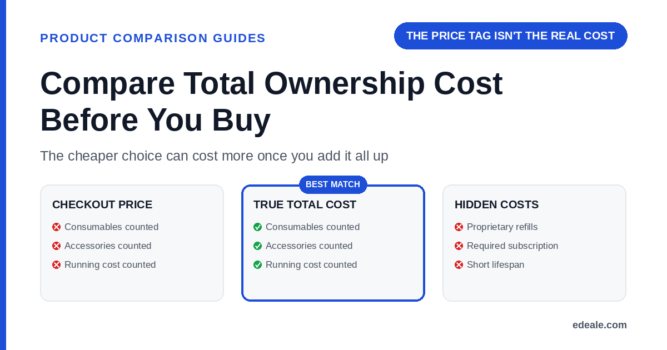
Two products at the same checkout price can cost very different amounts over time once you count consumables, accessories, subscriptions, energy use, and how long each one actually lasts.
This guide covers how to estimate total ownership cost properly, the specific ongoing costs that get overlooked most often, and when the cheaper upfront option is — and isn’t — the cheaper overall choice.
- The ongoing costs that don't show up at checkout
- How to estimate total cost over a realistic ownership period
- When a higher upfront price genuinely pays for itself
- A short checklist for comparing total cost, not just sticker price
A simple cost-per-year figure — total ownership cost divided by how many years you realistically expect to use the product — makes it far easier to compare two options fairly than looking at either number alone.
The Costs That Don't Show Up at Checkout
Ongoing Costs Worth Counting
A Simple Process for Estimating Total Cost
How to Estimate Total Ownership Cost
-
Start with the checkout price
The obvious starting point, but only the starting point.
-
List every consumable or accessory the product needs
Check the manufacturer’s own site or reviews for what buyers typically end up purchasing afterward.
-
Estimate a realistic ownership period
Use the manufacturer’s stated lifespan where available, or a conservative estimate based on similar products.
-
Add up consumables and accessories over that period
Multiply an item’s replacement frequency by the ownership period to get a realistic ongoing total.
-
Divide the full total by the number of years
This cost-per-year figure is what actually makes two different products comparable.
This doesn’t need to be precise to the pound — even a rough estimate consistently beats comparing checkout prices alone.
Some products are priced low specifically because the manufacturer expects to recoup the margin on a required proprietary consumable — check the price and availability of that consumable before assuming the low upfront price is the full story.
When the Higher Upfront Price Actually Wins
A higher checkout price genuinely pays for itself when it meaningfully reduces one of the ongoing costs above — a longer-lasting design that needs fewer consumables, lower running costs over years of frequent use, or a longer warranty that avoids a costly repair. It doesn’t automatically pay off just because it’s more expensive; the specific ongoing saving has to be real and large enough to close the gap.
Where Comparisons Go Wrong
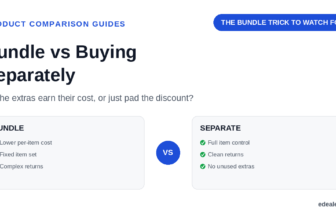
This is the same discipline behind deciding between budget and premium tiers — the checkout price is only useful once you know what it does, and doesn’t, include. It also connects directly to comparing a bundle against buying separately, since a bundle’s real value depends on the same kind of total-cost thinking.
Owners who’ve had a product for a year or more are the most reliable source for what it actually costs to keep running — see our guide on reading reviews when they disagree for how to find and weigh that kind of long-term feedback.
This is also part of edeale’s own editorial process — we look at total cost, not just the deal price, before recommending anything. Browse today’s verified deals to see current checkout prices across categories where ongoing costs are worth checking.
Total Ownership Cost FAQ
What is total ownership cost?
The full cost of owning a product over time — the checkout price plus consumables, accessories, subscriptions, running costs, and maintenance — rather than just the price paid at purchase.
How do I estimate total ownership cost without exact figures?
A rough estimate based on typical consumable prices and replacement frequency, divided by a realistic ownership period, is far more useful than comparing checkout prices alone, even without perfect precision.
Does a higher checkout price always mean a lower total cost?
No — it only pays off when it delivers a real, specific reduction in ongoing costs, like needing fewer consumables or lower running costs. A higher price alone doesn’t guarantee this.
What ongoing costs get overlooked most often?
Proprietary consumables, required accessories not included in the box, and subscription or software fees are the most commonly overlooked ongoing costs.
Do running costs really matter for occasional-use products?
Less than for frequently-used products — running-cost differences matter most when a product is used often over a long ownership period.
How long should I estimate a product's ownership period for this calculation?
Use the manufacturer’s stated lifespan where available, or a conservative estimate based on similar products’ typical lifespans if it isn’t stated.
Can a cheap product's proprietary consumable make it more expensive overall?
Yes — some products are priced low specifically because the ongoing margin comes from a required proprietary consumable, so check that cost before assuming the low price tells the whole story.
Is total ownership cost more important for expensive purchases?
It matters for any product with meaningful ongoing costs, but the impact is larger in absolute terms for bigger purchases, where the ongoing costs also tend to be larger.
Related Reading
- How to Compare Products Before You Buy With Confidence
- Budget vs Premium Products: Pay More Only When It Matters
- Bundle vs Buying Separately: Do the Extras Earn Their Cost?
- When Product Reviews Disagree, Which Ones Should Count?
Look past the checkout price
Compare two options side by side, or search for the exact products you’re weighing up on total cost.
Compare what you'll actually spend, not just what you'll pay today
The cheapest checkout price and the cheapest product aren’t always the same thing. List the consumables, accessories, and ongoing costs each option actually requires, estimate a realistic ownership period, and compare the total — it’s a better predictor of value than the price tag alone.