 edeale
A Bundle Discount Only Counts on Items You'd Buy Anyway
A bundle can look like an obvious saving next to buying each item on its own — until you total up what you'd actually use versus what's just padding the box to make the discount look bigger.
This guide covers how to do the real math on a bundle, the specific traps that make a bundle look cheaper than it is, and when buying items separately genuinely wins.
- How to calculate a bundle's real per-item savings
- The signs a bundle is padded with low-value extras
- When buying separately gives you more control worth paying for
- A quick checklist to run before adding a bundle to your basket
Open a second tab and check the standalone price of each item in the bundle. The bundle discount is only real once you’ve confirmed what those items would actually cost bought separately, today — not the bundle’s own claimed “individual value.”
How to Calculate a Bundle's Real Savings
Bundles typically advertise a “total value” figure next to the bundle price to make the discount look larger. That total value figure is often based on the highest individual list price for each item, not the actual current price you’d pay buying each one separately today.
How to Check If a Bundle Is a Real Saving
-
List every item actually included in the bundle
Bundles sometimes include a smaller or different version of an item than the standalone product page shows.
-
Find each item's current standalone price separately
Use the retailer’s own current price, not the bundle’s stated “value” for that item, which is often inflated.
-
Subtract the bundle price from the real total
That gap — not the bundle’s advertised “you save” figure — is the actual saving.
-
Subtract the value of anything you wouldn't have bought anyway
An item you’ll never use has zero value to you regardless of its price tag, even if it’s technically included for free.
-
Compare the adjusted saving against buying only what you need
If the adjusted saving is small or negative, buying just the items you actually want separately is the better deal.
This takes about five minutes and consistently catches bundles that look better than they are.
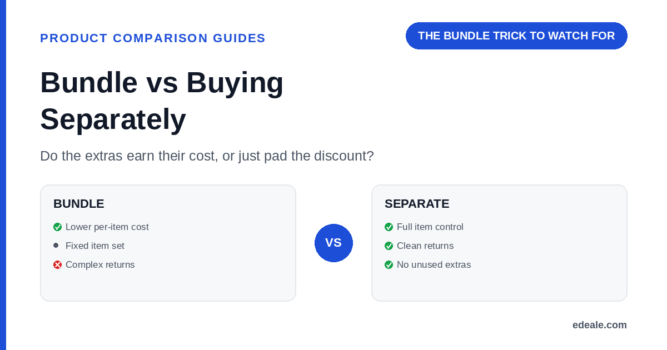
Bundle vs Buying Separately — At a Glance
A bundle claiming “£40 value for £25” is only meaningful if that £40 reflects real current standalone prices. Some listings calculate it from a higher list price than any retailer actually charges, making the discount look bigger than it is.
When Buying Separately Wins
Signs You Should Buy Separately Instead
Where Comparisons Go Wrong
This is the same core skill as any other purchase decision: compare what you’re actually getting, not what the marketing emphasizes. It pairs naturally with thinking about budget versus premium tiers for each item in the bundle, since a bundle sometimes substitutes a lower-tier version of an item you’d otherwise buy at a higher tier.
A bundle’s included accessories sometimes get less attention in reviews than the headline product. Search for reviews that specifically mention the bundle or the included extras — see our guide on reading reviews when they disagree for how to weigh what you find.
Confirming the exact model number of each item inside a bundle matters too — some bundles quietly substitute a different configuration than the standalone product page shows. If where you’re buying from is also in question, our guide on choosing a trustworthy online retailer covers how bundle terms can vary by seller.
Bundle vs Buying Separately FAQ
Is a bundle always the cheaper option?
Not always — a bundle’s advertised saving is often calculated against an inflated total value rather than current standalone prices, so it’s worth checking the real math before assuming it’s cheaper.
How do I calculate a bundle's real saving?
Find each included item’s current standalone price, total them, subtract the bundle price, then subtract the value of anything you wouldn’t have bought on its own.
Does an unused item in a bundle have any value to me?
Effectively no — value any item you wouldn’t otherwise buy at zero when doing your own comparison, regardless of what price the bundle assigns it.
Can returning one item in a bundle cause problems?
Sometimes — some retailers adjust the price of the remaining items or require returning the whole bundle together, so check the return policy for bundles specifically before buying.
Should I buy separately if I have a strong brand preference for one item?
Usually yes — a bundle only makes sense when you’re genuinely happy with every included component, not just tolerating one to get a discount on the rest.
Are bundle-specific reviews different from reviews of the main product?
They can be — search specifically for reviews mentioning the bundle or its included extras, since the main product’s reviews may not cover how the bundled accessories perform.
Is it ever worth paying more to buy items separately?
Yes, when the flexibility of choosing exactly what you want, or independent return handling, is worth more to you than the bundle’s discount.
How can I tell if a bundle's “total value” figure is inflated?
Compare it against the actual current standalone price of each item at the same retailer or elsewhere — a total value based on an unrealistic list price is a sign the discount is overstated.
Related Reading
- How to Compare Products Before You Buy With Confidence
- Budget vs Premium Products: Pay More Only When It Matters
- Open-Box vs Refurbished: Which Risk Is Worth Taking?
- How We Verify Listings and Claims
Do the real math before you buy
Check current standalone prices with our comparison tool, or browse today’s verified deals to see genuine multi-item discounts.
The bundle is only a bargain if you'd buy everything in it
A bundle discount is real when it’s calculated against genuine standalone prices and every included item has value to you. Do the five-minute math above before trusting the advertised saving, and buy separately whenever an included extra would otherwise sit unused.